
After a Season to Forget, Al Ahly Begin Their Rebuild with Thorup and Walid Salah El Din Exits
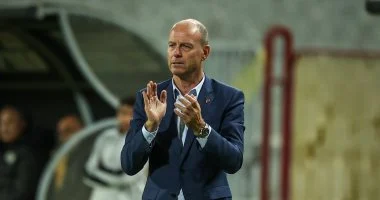
The departure of Jess Thorup from Al Ahly’s technical leadership, along with the club’s decision to thank Walid Salah El-Din for his role as football director, was not merely two separate decisions inside a club known for handling crises with calculated calm. Instead, the scene looked more like the beginning of a wide rebuilding process inside the Red Castle, after a season that left behind many questions and revealed that the team needs far more than a routine technical change.
Al Ahly, having ended the season in a manner that did not match its ambitions or the expectations of its fans, chose to begin the correction from the top. The head coach’s position was the first file to be opened. Danish coach Jess Thorup, who entered the experience with high hopes of restoring technical control, left the scene through an amicable agreement that ended the relationship between both parties after long sessions and negotiations aimed at closing the file without legal conflict or a prolonged crisis.
The End of a Phase and the Beginning of Accountability
Thorup’s spell with Al Ahly did not reach the ending the Red Devils’ supporters had hoped for. Although the coach won the Egyptian Super Cup, the overall picture of the season was far from convincing, especially with the decline in results domestically and continentally, and the team moving away from its usual image of imposing its personality on major competitions.
Al Ahly’s management did not view the matter as merely a failure in one tournament or a temporary dip in results. Instead, it read the situation as a deeper problem within the team. That is why the step to terminate the contract by mutual consent came to close a chapter that failed to provide the required answers, while opening the door to the search for a new head coach capable of restoring prestige, discipline, and technical identity.
Thorup’s departure was not a verbal decision or a quick emotional reaction after a difficult season. It came after legal and financial negotiations to settle the details of the separation. Al Ahly chose the path of an amicable settlement in an attempt to avoid any future dispute, especially as the coach’s contract included clear financial obligations.
According to reports, the club paid a significant cost to end the relationship, but for the management, it appeared to be a necessary price to open a new page. In major moments of correction, Al Ahly does not look only at the value of a settlement, but also at the cost of continuing a situation that does not serve the team or align with its ambitions.
Reorganizing the Red House
In parallel with Thorup’s departure, the decision to thank Walid Salah El-Din from his role as football director confirmed that the change would not be limited to the technical staff alone. The departure of the football director carried a clear message that Al Ahly is reassessing the entire working system, from the pitch to the dressing room, and from technical decisions to the daily management of the team.
Walid Salah El-Din took on the role at a difficult time, amid major pressure and accumulated challenges. However, the season’s results and the state of the team pushed the management to reconsider the shape of the system. The decision did not appear to be a personal move against one name, but rather part of a wider filtering process aimed at reorganizing the house from within.
The crisis at Al Ahly is no longer linked only to the name of a coach, nor only to the position of football director. What is happening inside the club suggests that the management believes last season exposed flaws on more than one level: technical, administrative, and disciplinary. That is why the decisions extended to more than one figure within the football sector, in a scene that indicates Al Ahly is preparing for an entirely different phase.
The departure of Adel Mostafa from the technical staff and Walid Soliman from the youth sector, alongside Thorup and Walid Salah El-Din, makes the situation look closer to a restructuring process rather than limited adjustments. The club is trying to break away from a confused phase and build a stricter new stage, especially ahead of a season that cannot tolerate further disorder.
The next phase at Al Ahly will not stop at choosing a new head coach only. It will also require an administrative figure capable of controlling the dressing room, restoring discipline, and protecting the team from repeated pressure. That is why talk has emerged about names with a strong history inside the club, most notably Wael Gomaa, as one of the symbols capable of imposing personality and commitment.
At moments like these, Al Ahly is not looking for a big name just for appearance. It is looking for a system that knows how to regain control. The team needs a coach with a clear project, a football director with presence, and a management capable of protecting technical decisions from confusion and interference.
What has happened inside Al Ahly in recent hours shows that the season did not end with the final whistle of the last match. Rather, it was followed by the beginning of the real reckoning. A team used to competing for every title cannot treat decline as something normal, nor can it delay correction for long in front of fans who do not accept half-solutions.
The departure of Thorup and Walid Salah El-Din is not the end of the crisis, but the beginning of the path toward solving it. The real test now will not be in announcing the names who have left, but in choosing the replacements capable of returning Al Ahly to its natural place: a team that knows what it wants and enters every season with the mentality of a champion, not with the reaction of an angry side.
Al Ahly has closed a heavy page, but it has not yet guaranteed that the new one will be better. The difference will be made by the next decision: who will lead the team? Who will manage the dressing room? And will these changes mark the beginning of a strong comeback, or merely another attempt to postpone a deeper crisis?
Related News
After a Season to Forget, Al Ahly Begin Their Rebuild with Thorup and Walid Salah El Din Exits
Mbappé Left... So Why Is PSG Better Than Ever?
Egypt's Top Scorer Is Back on Al Ahly's Radar.. Will Ahmed Yasser Rayan Return?
After the Emotional Farewell, Could Slot's Sacking Bring Salah Back to Liverpool?
From Surprise Call-Up to Match Winner.. Ziko's Breakthrough Night Against Russia
MoreLatest News
After a Season to Forget, Al Ahly Restructure Their Football Operations
Watch: From Wedding Night to World Cup Camp.. Marmoush Joins Egypt in America
Video: Egypt's U-17s End 29-Year Wait With Bronze Medal Win Over Hosts Morocco
The Rock Returns.. Wael Gomaa Set for Al Ahly Football Director Role
Salah Is Back as Egypt Prepare for Their Final World Cup Rehearsal Against Brazil
More