
.png)

From Marmoush to Bouaddi: Did Man City Sacrifice Their Egyptian Star to Rebuild After Rodri?
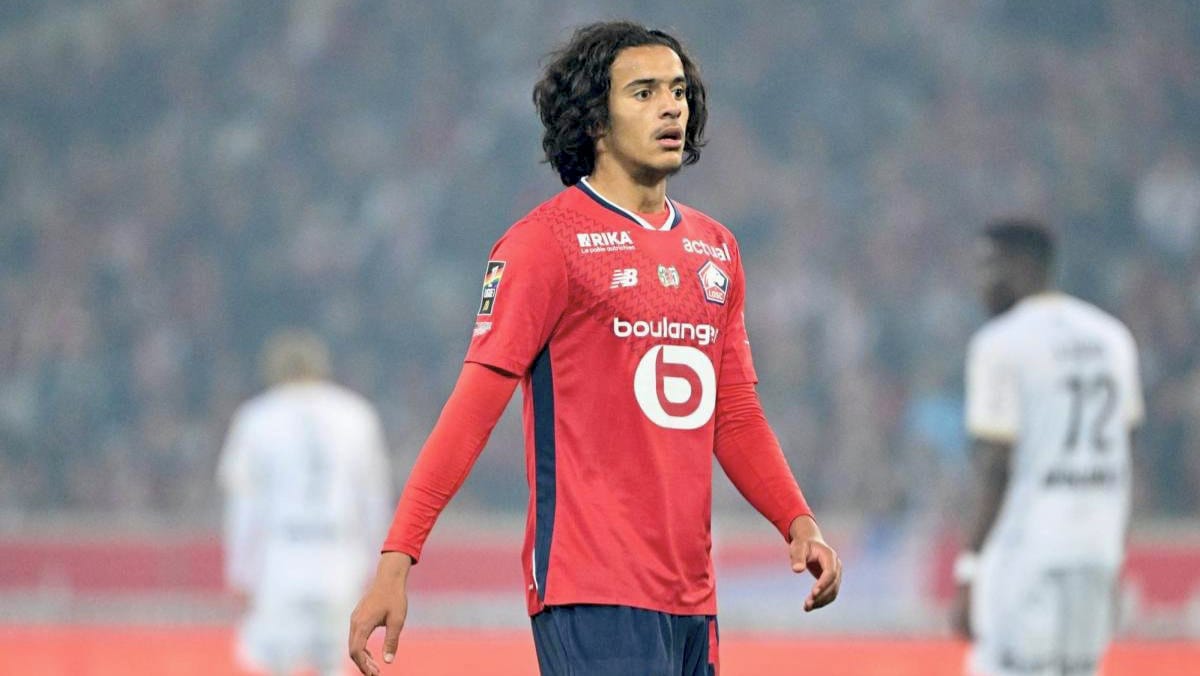
Only hours separated two major developments in Manchester City’s transfer window: Omar Marmoush moving toward a Tottenham exit and City agreeing a deal worth up to €100 million for Lille’s Moroccan midfielder Ayyoub Bouaddi.
The timing alone does not prove City pushed Marmoush out specifically to sign Bouaddi.
But it does raise a legitimate question: did the Egyptian become one of the casualties of City’s latest rebuild, with his departure helping create the financial and squad space required to complete one of the summer’s biggest transfers?
Reports before either move was concluded had already suggested City were prepared to move Marmoush and Savinho on as part of an effort to raise funds for midfield reinforcements, with Bouaddi among their principal targets.
Marmoush Did Not Ask to Leave — but City Opened the Door
Perhaps the most striking part of the situation is that Marmoush did not appear to be pushing for an exit.
Savinho had made his desire to leave clear, but Enzo Maresca said Marmoush had not asked to leave Manchester City.
City were nevertheless willing to sanction his departure less than two years after paying around £59 million to sign him from Eintracht Frankfurt in January 2025.
By August 23, Tottenham had reached a verbal agreement over Marmoush, with the latest reports describing an initial loan containing a £50 million purchase clause that could become mandatory if certain conditions are met.
That makes the question more interesting.
If Marmoush himself was not demanding an exit, why were City prepared to let him go?
Part of the answer may lie in the direction of their rebuild.
€100m Bouaddi Deal Shows Where City’s Priority Lies
On the same day Marmoush’s Tottenham move took a decisive step forward, City agreed to pay Lille €95 million plus another €5 million in potential add-ons for 18-year-old Ayyoub Bouaddi.
The Moroccan operates primarily as a No. 6 and represents another major investment in City’s attempt to rebuild their midfield following Rodri’s departure to Barcelona for around £65 million.
Importantly, reporting indicates that the majority of Bouaddi’s fee will effectively be covered by the money received for Rodri.
That means it would be too simplistic to claim that City sold Marmoush in order to buy Bouaddi.
Transfer-market financing, however, rarely works through such a direct one-in, one-out calculation.
Clubs consider their overall spending, wage commitments, squad places, future transfer income and which players can be converted into valuable assets.
City have already spent a club-record £116 million on Elliot Anderson and are now committing up to €100 million to Bouaddi, demonstrating just how heavily they are investing in reshaping the midfield.
Moving Marmoush and Savinho out at the same time gives City greater financial flexibility while reducing the cost of that overhaul.
Coincidence — or a Clear Sign of City’s Priorities?
The timing is difficult to ignore.

By August 21, negotiations over Marmoush and Savinho moving to Tottenham were already at an advanced stage. Two days later, City had reached their agreement with Lille for Bouaddi, while Marmoush’s move to Spurs had also reached verbal agreement.
That sequence does not prove direct causation.
What it does show is where Manchester City’s priorities now lie.
Marmoush is an attacking player with considerable market value whom City believe they can afford to lose, particularly with Erling Haaland and numerous other attacking options already in the squad.
Central midfield is a different matter.
Rodri’s departure left a major structural hole, and City have responded by spending enormous sums on Anderson and Bouaddi while continuing to assess further midfield reinforcements.
Marmoush may therefore not have been sold for Bouaddi, but he appears to have become one of the assets City were prepared to sacrifice in order to reshape the squad around a different set of priorities.
Did Marmoush Pay the Price for City’s New Project?
From City’s perspective, the logic is understandable.
They have lost one of the world’s leading holding midfielders and need to construct a new midfield capable of functioning for years after Rodri.
At the same time, they possess enough attacking depth to consider cashing in on players who still command substantial transfer value.
From Marmoush’s perspective, however, the picture looks very different.
He had not asked to leave, yet City were prepared to move him on while committing hundreds of millions to rebuilding other areas of the team.
That makes his departure fundamentally different from that of a player simply forcing his way toward a new challenge.
Tottenham may ultimately provide Marmoush with the larger role he struggled to secure behind Haaland, and the transfer could prove beneficial for everyone involved.
But the events of the past few days also make one thing clear: once Manchester City decided rebuilding the midfield was their priority, even a player of Marmoush’s quality became expendable.
The equation is therefore probably not as simple as **Marmoush out, Bouaddi in**.
But it is equally difficult to view the moves as entirely unrelated.
Marmoush’s exit gives City another valuable asset to monetise and creates squad space at precisely the moment they are committing €100 million to a player they believe can become a cornerstone of their post-Rodri midfield.
In a transfer window operating at this scale, that extra room can be the difference between admiring a player and getting the deal over the line.
.png)











.svg.png)

.svg.png)