.png)
After Boycott Threats and Resignations, Infantino Withdraws Plan to Sell World Cup Rights
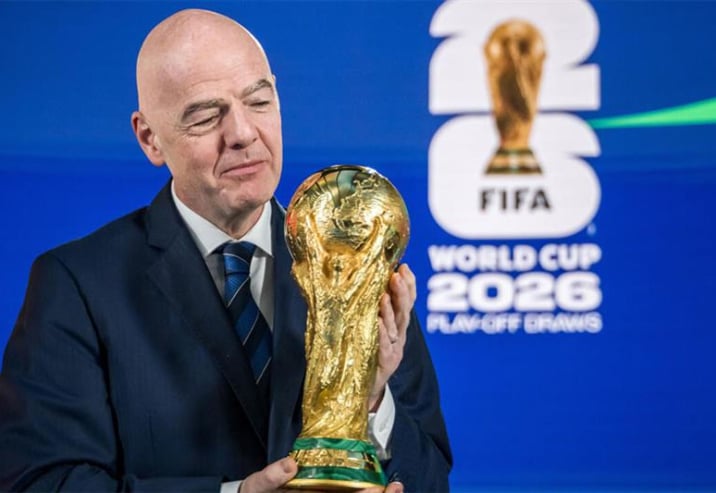
Gianni Infantino, president of the International Federation of Association Football (FIFA), has withdrawn a controversial proposal that sought to bring private investors into the commercial rights of World Cup competitions, following growing opposition across the global football community and an expanding coalition of organizations rejecting the plan.
The project, known as “FIFA Forward Enterprise,” was presented as a way to generate additional financial resources to support national associations and improve football infrastructure, particularly in countries requiring greater investment. However, within days, the proposal became a source of significant division, prompting FIFA’s leadership to halt the initiative before it reached the implementation stage.
A Growing Front of Opposition
The proposal faced increasing resistance from several continental and national football associations, with the Union of European Football Associations (UEFA) leading the opposition. European associations argued that the World Cup is one of football’s most valuable global assets and should not be treated as an investment opportunity or subjected to the sale of any portion of its commercial ownership.
The opposition was not limited to Europe. The Asian Football Confederation (AFC) and the Confederation of North, Central America and Caribbean Association Football (CONCACAF) also joined the growing resistance, increasing pressure on Infantino and weakening the prospects of advancing the project without broad consensus.
The crisis escalated further after European associations reportedly raised the possibility of boycotting certain FIFA competitions if the plan moved forward, a move that could have triggered a major confrontation between the world governing body and some of football’s most influential forces.
A Withdrawal That Raises Questions
Infantino confirmed that the project would not proceed, stressing that its original purpose was to support the development of football and expand its financial resources. However, he acknowledged that the discussions had revealed divisions that no longer served the objective for which the proposal had been introduced.
The decision came amid additional pressure within FIFA, including the resignation of Carlos Cordeiro, a prominent adviser to the FIFA president and former president of the U.S. Soccer Federation, who publicly opposed the idea of selling a stake connected to the World Cup.
Criticism also intensified following remarks attributed to Kevin Lamour, FIFA’s Chief Operating Officer, who raised concerns over a lack of transparency during the development of the project and suggested that the proposal had not received sufficient institutional discussion within the organization.
The plan reportedly involved the creation of a commercial entity valued at approximately $20 billion to manage the commercial rights of several FIFA competitions, including the men’s and women’s World Cups and the FIFA Club World Cup, with private investors expected to acquire a stake of up to 20%.
Following the withdrawal, Infantino is expected to reopen dialogue with national and continental associations in an effort to reach a shared framework that supports the development of football without creating further divisions within the global game.
However, the consequences of the crisis may extend beyond the project itself. The controversy has revived questions surrounding FIFA’s governance, the limits of individual decision-making, and Infantino’s political future ahead of the organization’s next presidential election.
While the FIFA president has succeeded in containing the immediate confrontation, the withdrawal of the proposal may not mark the end of the crisis. Instead, it could signal the beginning of a broader period of review within the world governing body, after the idea of private investment in the World Cup became a major test of Infantino’s relationship with the associations that form the foundation of FIFA’s influence.
Related News
Amouta Facing Criticism and Pressure at Al Ahly.. What Has Changed and What Is Still Missing?
Haissem Hassan Dazzles Celtic Fans, but Is Match Fitness the Final Hurdle?
After Two Costly Defeats, What Does Egypt Basketball Need to Reach the 2027 World Cup?
Hamza Abdelkarim’s Barcelona Absence: Could Contract Talks Be Delaying His Debut?
Egyptian League Is Africa’s Strongest, but Ahmed Diab’s Middle East No. 1 Claim Lacks Evidence
MoreLatest News
Al Ahly Escalate Amr Zahran Punishment With Six-Month Ban and 50% Salary Deduction
Strong Start Despite Red Card.. Egypt U20s Beat Libya and Go Top of North African Qualifiers
Salah and Marmoush Lead the Attack.. Egypt’s Expected Lineup Against Angola in AFCON Qualifying Opener
Amid Defensive Injuries, Omar Fayed Rises in Egypt Plans as Haissem Hassan Is Monitored
Cairo Stadium Halts Club Matches Until Al Ahly-Zamalek Derby as Capital Cup Fixtures Move
More
.png)